Rethinking the regas terminal
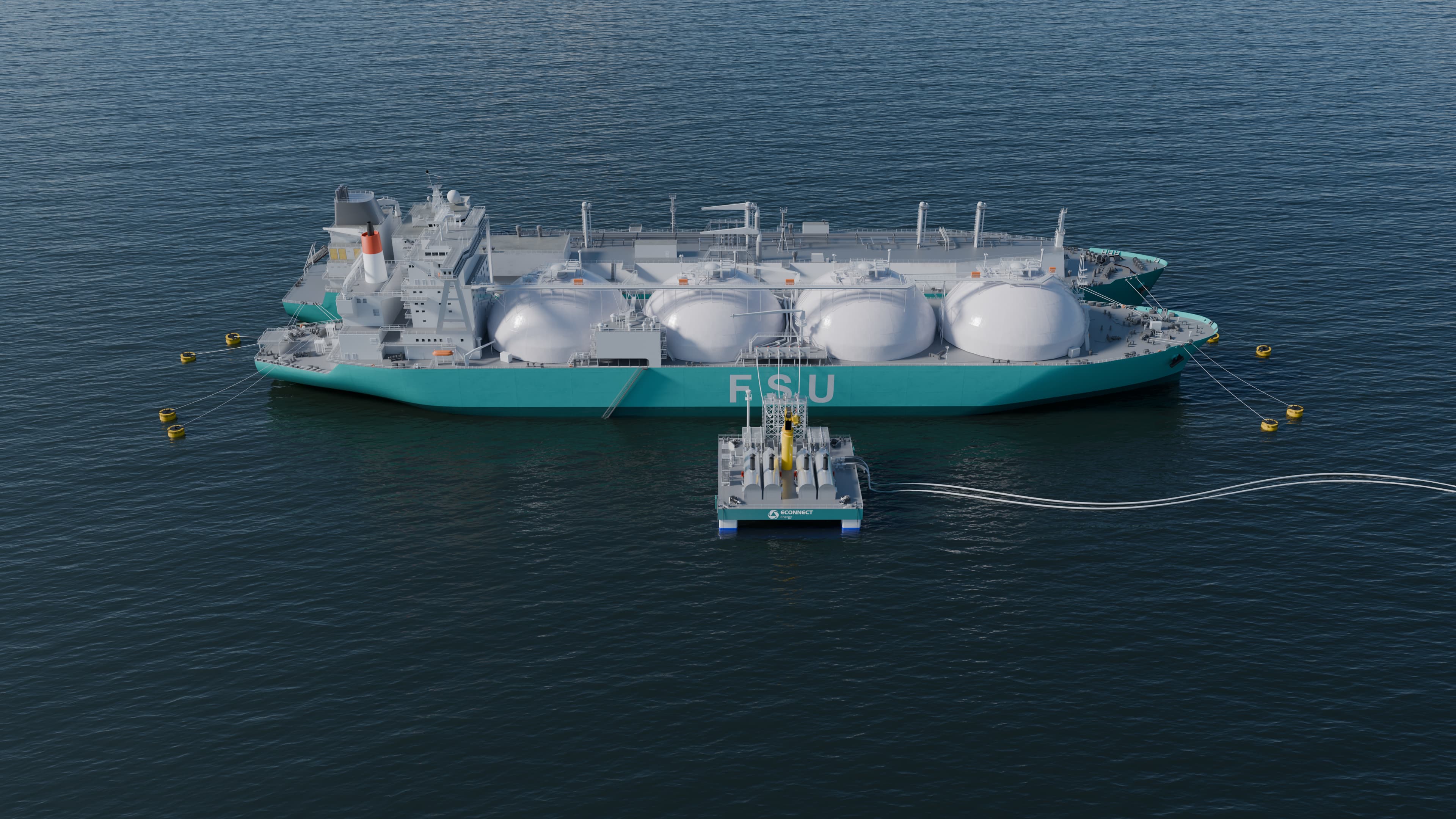
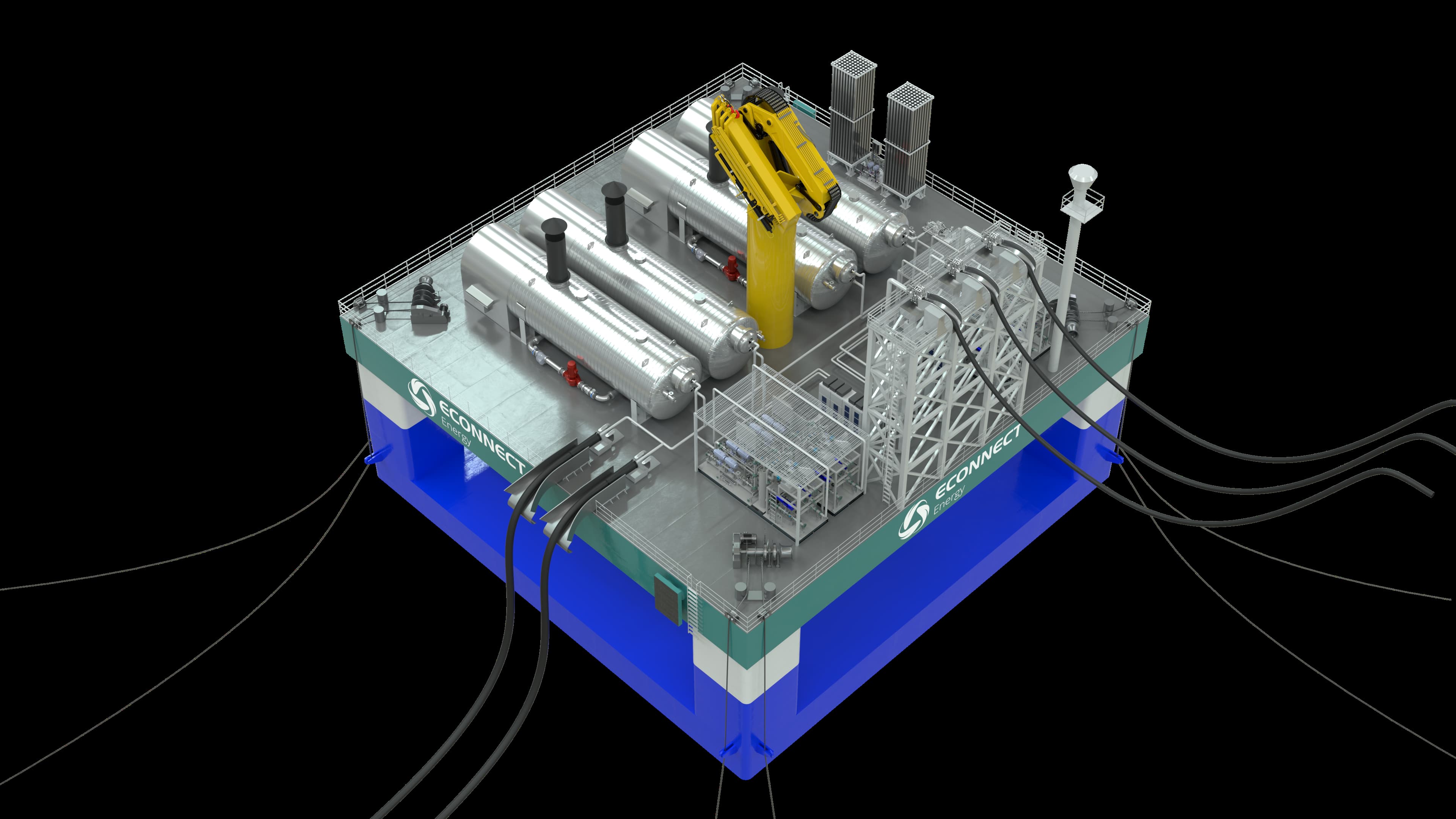
One such solution is the ECOnnect IQuay R-Class, a floating regasification platform developed as part of the IQuay Regas Terminal. Instead of relying on a single large regas vessel or extensive onshore facilities, the R-Class enables regasification to be carried out on a dedicated offshore platform, combined with floating storage and jettyless gas delivery to shore. The solution is designed for projects where conventional infrastructure is either oversized, too complex, or poorly matched to local conditions.
.png)
An onshore LNG terminal typically requires large scale coastal construction, extensive civil works and long permitting processes. Even in markets with sound fundamentals, timelines can extend over many years and costs can escalate accordingly. Floating Storage and Regasification Units (FSRUs) were introduced to reduce some of this complexity, but today they face their own constraints, including limited availability, long delivery schedules and rising conversion costs. Together, these factors have led many project developers to reassess how regasification capacity can be delivered in a simpler and more proportionate way.
Separating storage and regasification
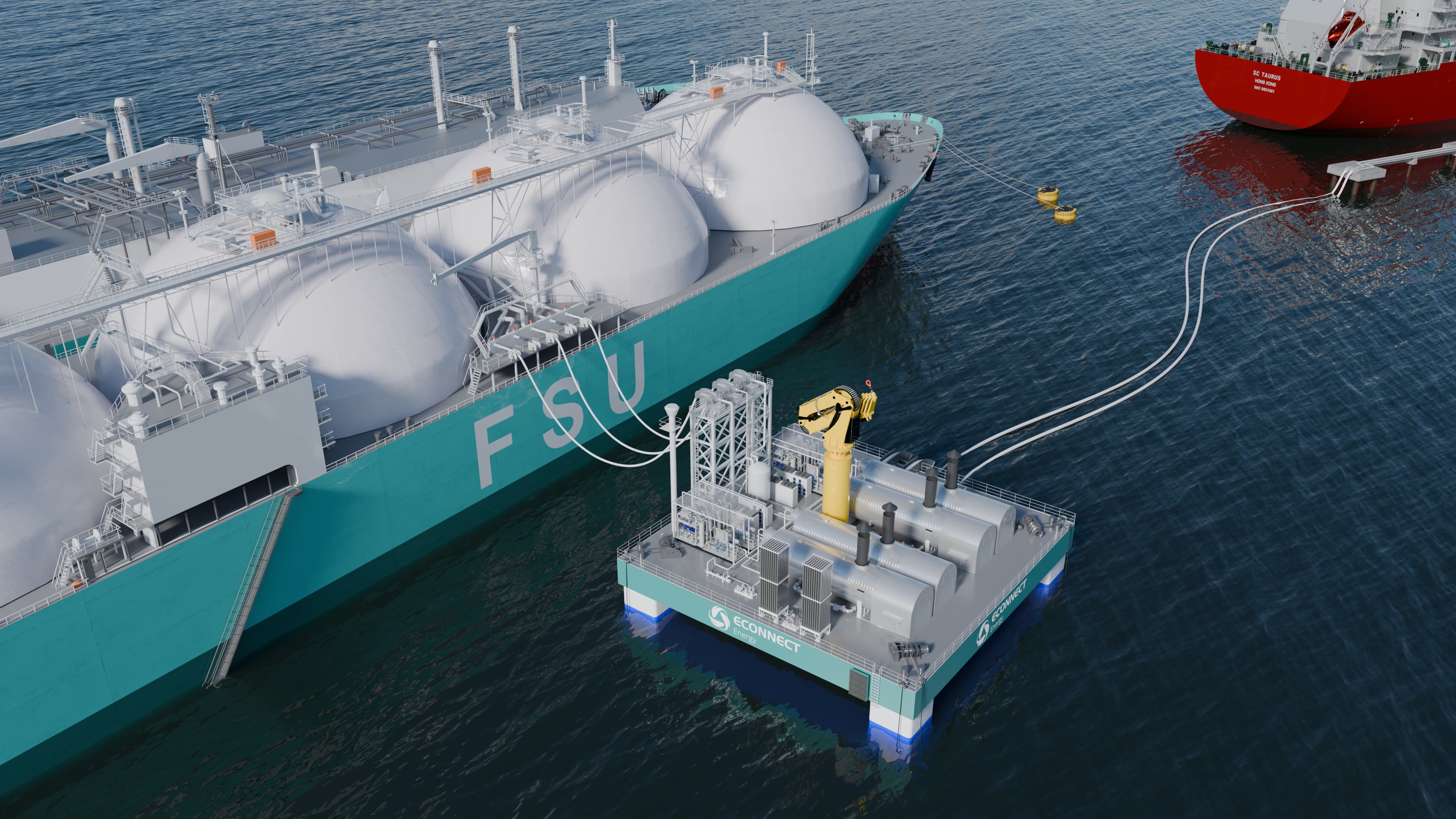
The R‑Class takes a different structural approach by separating storage and regasification into distinct, modular elements. LNG is stored on a conventional Floating Storage Unit (FSU), often a standard LNG carrier with limited modification, while regasification takes place on the R‑Class platform. This separation reduces technical complexity, lowers vessel modification requirements and allows regasification capacity to be sized according to site demand rather than peak scenarios. In contrast, FSRUs are typically configured with maximised regas capacity to remain flexible for future redeployment and to meet peak demand requirements across different markets. If gas demand at site increases over time, regas capacity on the R‑Class can be adapted by modifying or adding modules, offering a simpler and more proportionate path to scale than reconfiguring or replacing an FSRU.
Weather robustness compared to barge-based solutions
In some regions, regasification has been addressed using barge-based units with regas equipment mounted topside. While such solutions can be suitable in sheltered waters, they are inherently limited by motion response and weather sensitivity. The R-Class solves this with a semi-submersible offshore platform, offering significantly higher stability and improved operability in more exposed environments. Its motion characteristics allow for higher uptime and more consistent operations where wave action, swell, or seasonal weather variations would otherwise restrict barge based systems.
Cost, permitting and operational simplicity
From a commercial perspective, this combination of modularity and offshore robustness translates into reduced overall project cost and lower execution risk. Large scale onshore works are avoided, full FSRU conversions are not required, and infrastructure can be delivered in well-defined modules. The fully floating configuration can also simplify permitting, as seabed disturbance and permanent coastal impact are kept to a minimum.
Operationally, regasification is carried out offshore, with high pressure gas delivered directly into the existing onshore pipeline network or to onshore power stations. This removes the need for LNG handling or processing facilities on land and keeps the terminal layout compact and straightforward. Regas modules are skid based, allowing for accessible maintenance and future reconfiguration as project requirements evolve.
A practical alternative, not a replacement
Rather than replacing onshore terminals or FSRUs, the R-Class fills a gap between the traditional options. It provides a realistic and proportionate solution for projects that need offshore regasification capacity without committing to large, inflexible assets. In that sense, R-Class reflects a broader shift towards infrastructure designed around specific project needs, and a redefinition of marine energy infrastructure.

.jpg)