A Changing World Order
Recent escalation in the Gulf highlights the structural exposure of global energy logistics. According to Rystad Energy, stalled traffic through the Strait of Hormuz is currently preventing around 15 million barrels per day of crude oil from reaching global markets. Even with alternative pipelines in Saudi Arabia and the UAE, an estimated 8–10 million barrels per day remain effectively exposed if the transit constraints persist.
Whether disruption is physical or precautionary, the consequence is the same: when maritime confidence erodes, logistics become a binding constraint.
While oil exports are the most visible pressure point in the Gulf, the strategic implications of disrupted energy logistics extend further. Many domestic power systems, not only in this region, rely heavily on uninterrupted gas supply. Electricity generation, desalination, industrial expansion and critical infrastructure all depend on stable gas flows. In a more volatile regional environment, resilience must be built not only into export routes, but into domestic energy architecture.
The Precedent: Speed as a Strategic Variable
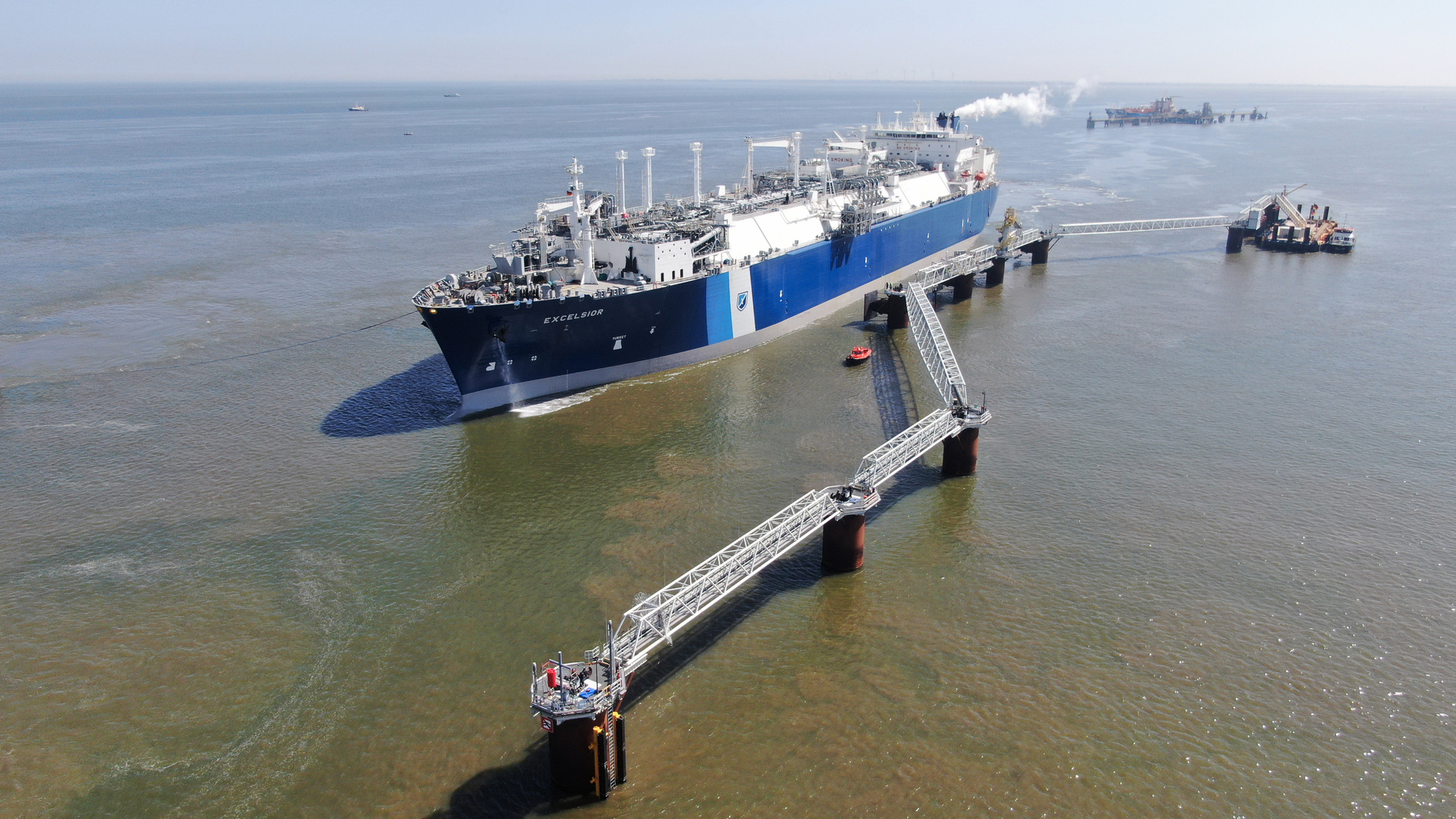
Europe faced a comparable shock in 2022, when pipeline gas deliveries from Russia dropped sharply. Traditional LNG terminal development timelines, often stretching over several years, were incompatible with the immediate need to secure alternative supply. Germany responded by accelerating floating LNG import capacity, demonstrating that critical infrastructure deployment can be heavily accelerated with new technology and fast tracked permitting.
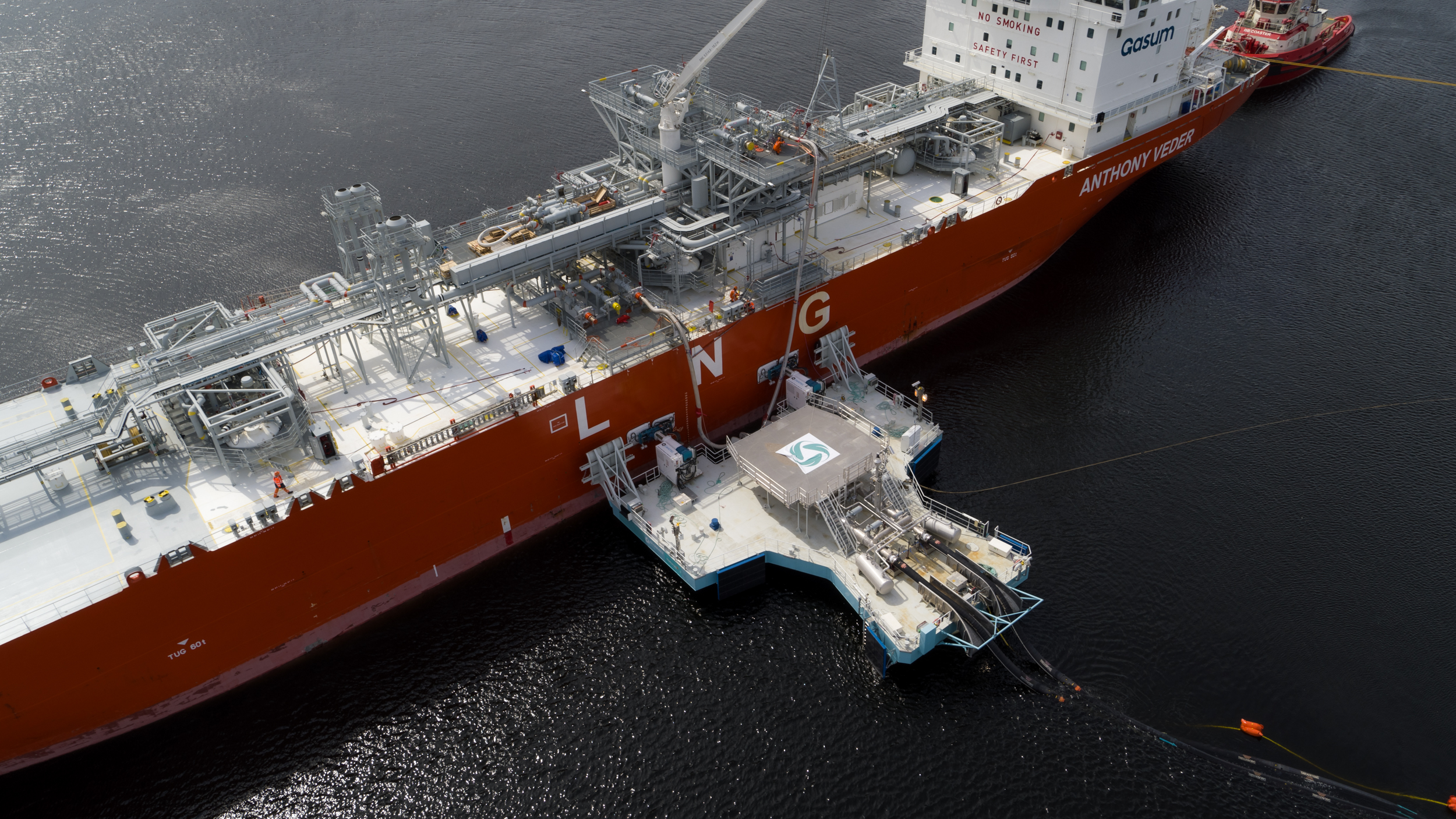
At the Wilhelmshaven LNG Terminal, German authorities and the state-owned operator Deutsche Energy Terminal GmbH (DET) selected ECOnnect Energy for the marine scope of works. ECOnnect’s IQuayF-Class was the chosen system because of its ability to enable LNG import in record time, without the need for complicated and overly intrusive construction works at sea.
By combining a floating storage and regasification units (FSRU) with modular offshore gas transfer solutions, LNG-to-shore connection could be realized without extensive jetty construction or prolonged civil works, for a continuous supply of gas to shore. This project demonstrated that in times of geopolitical stress, deployment speed becomes a strategic asset.
Designing Infrastructure for Uncertainty
At ECOnnect Energy, we develop gas transfer solutions specifically engineered for rapid deployment and operational flexibility.
Our systems are designed to:
- Enable LNG transfer from FSRUs or LNG carriers directly to shore without permanent jetties
- Significantly reduce construction timelines compared to conventional terminals
- Minimize coastal footprint and civil work complexity
- Integrate with existing onshore gas grids
- Remain modular and redeployable

This approach allows governments and energy companies to establish import capacity within compressed timeframes, without committing to large-scale fixed infrastructure that may take years to permit and construct. Such rapidly deployable solutions create optionality in the event of maritime disruption. By securing domestic gas supply during peak demand periods, governments can strengthen the resilience of critical energy infrastructure and industrial zones.
From Chokepoints to Optionality
In the context of recent developments in the Middle East, the Strait of Hormuz remains one of the world’s most critical energy chokepoints. These developments illustrate how quickly market conditions can shift when transit routes are perceived as insecure.
Energy systems built for stable periods must now operate in an era defined by uncertainty. By enabling fast-tracked gas import solutions, ECOnnect Energy contributes to a more resilient energy architecture where time-to-deployment, modularity and flexibility are embedded into national planning frameworks.
As geopolitical dynamics evolve, energy security will increasingly be measured not only by reserves under ground, but by the ability to establish and adapt supply routes above ground. Building that adaptability into gas infrastructure today strengthens national resilience tomorrow. Here, fast-track transfer solutions will play a key part.

.jpg)