Whether supporting LNG terminals, floating storage and regasification units (FSRUs), offshore loading facilities, or energy infrastructure in exposed marine environments, a mooring system plays a critical role in keeping assets safely on station throughout their operational life.To find out what that actually takes, we had a sit down with Jikun You, Principal Marine Engineer at ECOnnect Energy. Jikun holds a PhD in Marine Hydrodynamics from NTNU, with a research background in wave forces and moored ship motions.
Today, that expertise feeds directly into his work on mooring and riser analysis, from early-phase studies through to detailed engineering.

Mooring analysis is one of the disciplines within ECOnnect Energy's marine engineering capability, alongside metocean assessments and hydrodynamic modelling, helping project teams evaluate solutions that balance safety, operability and project economics.
What defines a successful mooring system?
A mooring system's core function, says Jikun, is to keep the floating unit in position during its entire designed life, without exceeding the strength or fatigue capacity of any component, and without unacceptable risk to personnel or equipment.
From there, it becomes a matter of optimisation. Configuration and component selection must be tailored to the vessel's footprint and offset range, while keeping cost under control. It is one reason offshore configurations such as spread moorings or multi-buoy moorings (MBM) are often attractive alternatives to a fixed jetty for floating units: they can reduce both footprint and capital cost while still meeting the station-keeping requirements.
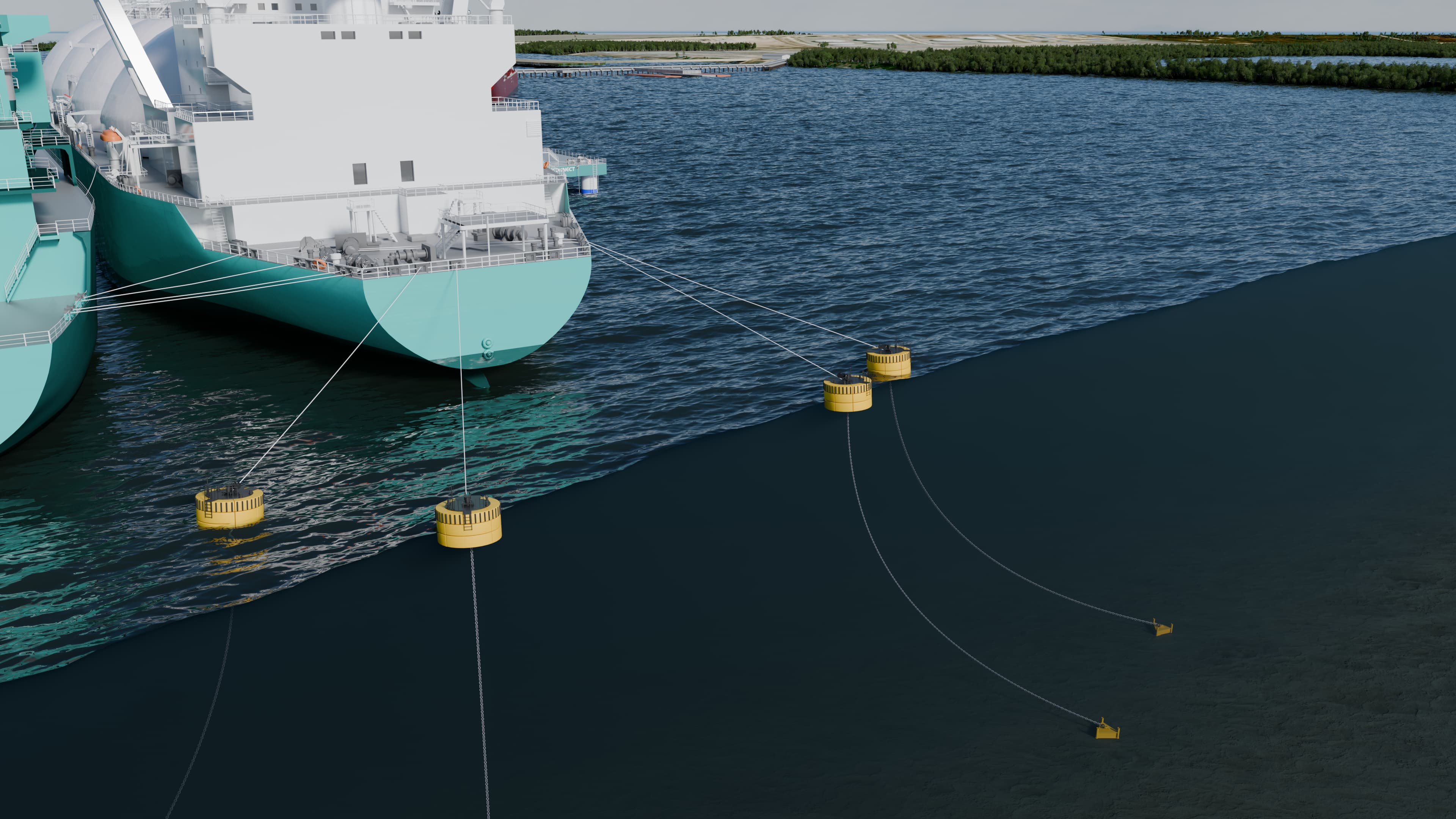
Redundancy is just as essential. Mooring systems are designed so that "the loss of a single line does not lead to a cascading failure or unacceptable vessel excursion," as Jikun puts it, with the fatigue life of every component verified given the cyclic nature of mooring loads over the design life.
Reliability, though, is not decided at the design desk alone. Corrosion protection, maintenance access, and ease of installation and recovery all determine whether a system holds up in service, "not just on paper at the design stage." Compliance with the relevant classification society and industry standards, together with a clear emergency response and quick-release philosophy, complete the picture of a mooring system built to perform over its service life, not merely to pass an initial design check.
The challenges clients face
Cost, leadtime, footprint and reliability: in Jikun's experience, these are the factors that matter most to clients developing a mooring solution.
"Cost often favours offshore alternatives, as a spread mooring or MBM system typically offers significant advantages compared to a jetty." Leadtime is usually dictated by a short or fast-track project schedule, while footprint needs to stay as small as possible given nearby infrastructure and marine traffic.
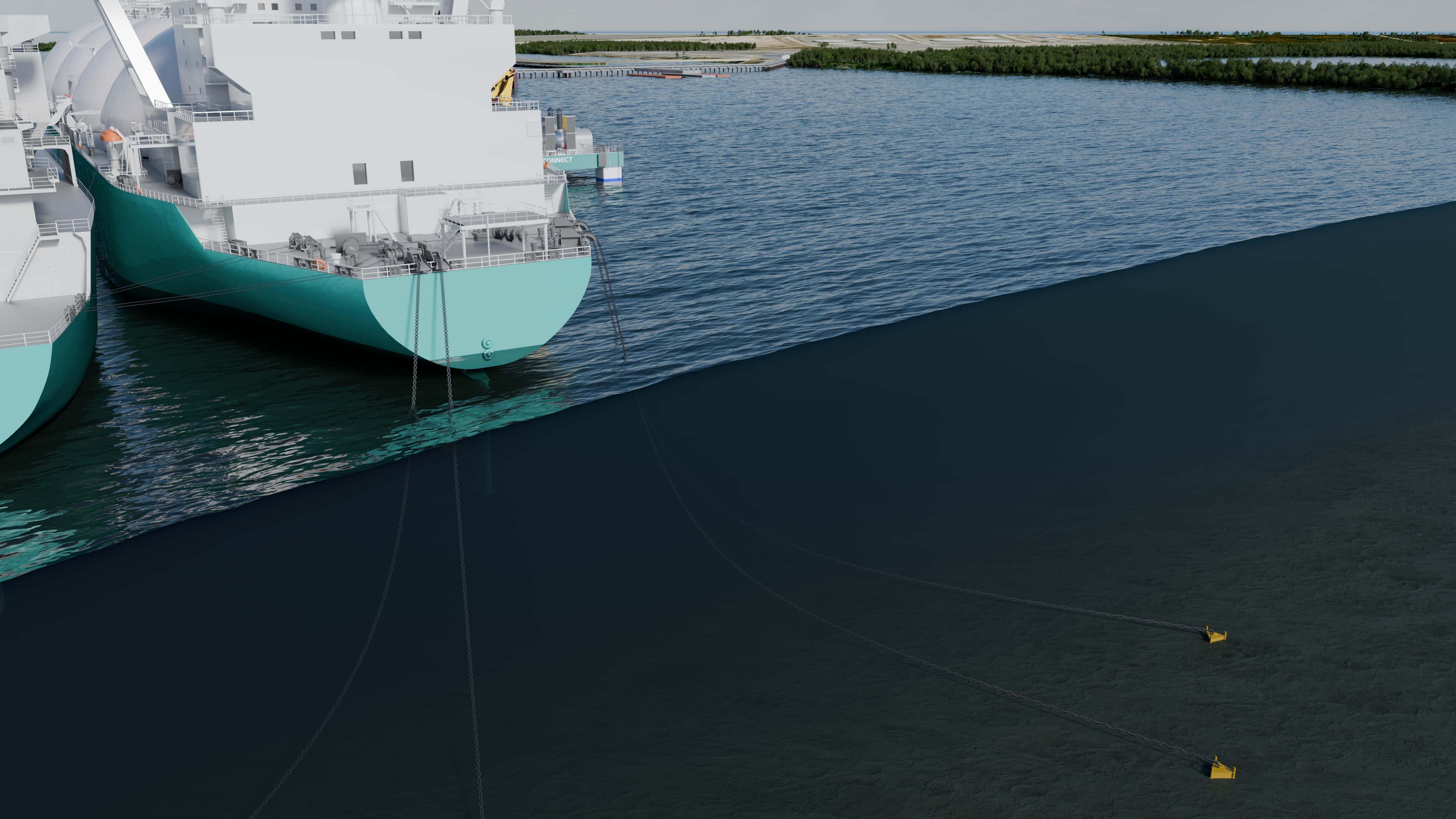
The real challenge, Jikun notes, is balance: the design must be safe and functional, while still meeting footprint and economic requirements.
Engineering solutions for complex offshore environments
As offshoren energy projects continue moving into new regions and increasingly demanding environments, proper mooring analysis is becoming more important than ever. Modern engineering tools make it possible to evaluate vessel behaviour, environmental loading and mooring performance long before equipment is installed. Through detailed analysis and simulation, project teams can compare alternative concepts and identify solutions that improve both operability and long-term reliability, while meeting the cost, footprint and reliability requirements clients bring to every project.
At ECOnnect Energy, mooring analysis sits alongside metocean and hydrodynamic studies as part of the marine engineering support we bring to offshore energy infrastructure projects.
Mooring may not be the most visible part of offshore infrastructure, but it is what keeps everything else safely in place.